
|

TING SHAO KUANG
(If you like TING, you'll love JIANG TIE FENG)
|
|
Please
call for many additional Ting Shao Kuangs we have available! |
|
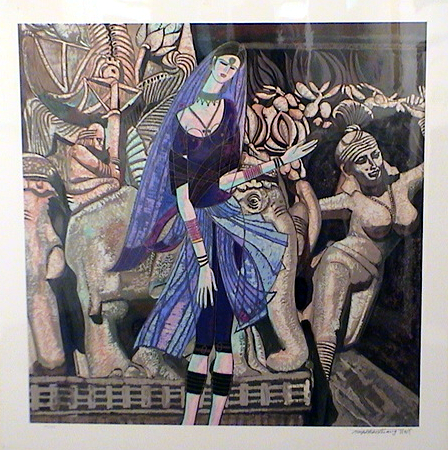 |
GOLDEN AGE OF INDIA $550 |
|
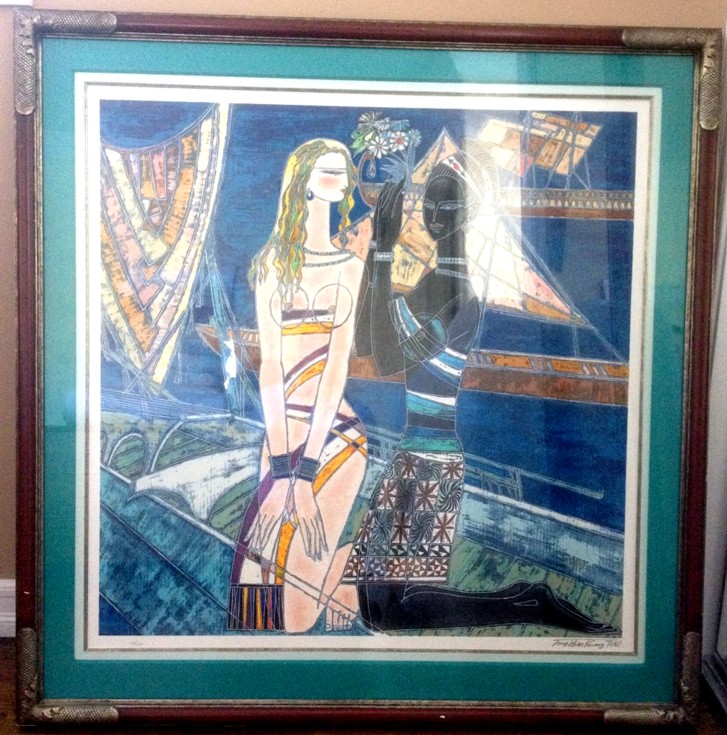
FRIENDSHIP ALONG THE
RIVER Call for Special Pricing |
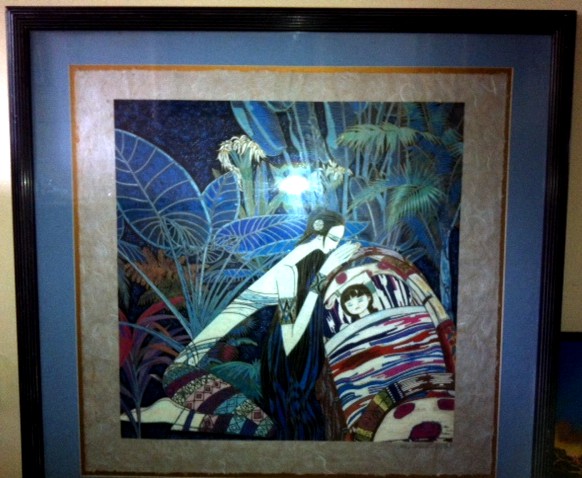 |
CRADLE SONG Our price to you $2500 |
Please
call for many additional Ting Shao Kuangs we have available! |
|
Ting Shao Kuang as born in Chenggu, a village located in the Northern province of Shanxi, China in 1939. The year Ting was born, this area, which once was the center of an advanced civilization, was reeling from the ravages of the Sino-Japanese war. But as the war progressed, Ting's father, a Kuomintang official in Beijing, helped rally the Nationalist forces, and the Japanese Imperial Army was eventually defeated.
By age 11, he was painting every day, using cooking oil as a medium for his pigment. Despite his lack of adequate supplies, he evidenced such remarkable talent that, in 1954, he was given the opportunity to attend the prestigious high school affiliated with the Central Academy of Fine Arts in Beijing.
In 1957, Ting was accepted at Beijing's Central Academy of Arts and Crafts. Although he was taught "Socialist Realism" in his classes, it was during this time that he discovered the works of Picasso, Matisse and Modigliani. The paintings of these artists inspired him to experiment with new themes and techniques.
It is generally known that Picasso's paintings have exerted a great influence on the modern world, as have Oriental paintings. Ting Shao Kuang, a prominent contemporary Chinese painter in America, has produced works characterized by a combination of traditional Chinese painting techniques and the more expressive Western art forms. He has created a unique style that does not belong exclusively to the East or the West, but to the world.
Gallery Location (by appointment only) - 8678 Melrose Ave. • West Hollywood, CA. 90069
Web Design by Emily Sharbani at Vital Records & Publishing